StoolSense

Triggers

Caffeine: does timing matter?

Is it the caffeine - or the timing - that’s driving your urgency or Type 6 mornings?

Caffeine can speed gut motility, but for many people the timing is the bigger lever than the total amount. If you routinely drink coffee on an empty stomach, a simple 7-day shift (coffee after your first bite of breakfast) can reveal whether timing correlates with urgency, softer stool, or a “morning rush.” Seek care for blood, black stool, severe pain, fever, vomiting, faintness, dehydration, or unexplained weight loss.

Key takeaways

  • Make one small change: keep dose the same and move the first caffeine later.
  • Track the morning window (first food, first caffeine, stool type, urgency).
  • If nothing changes, you learned something useful - move on to another single-variable test.

Watch-outs and misinformation

  • Energy drinks, pre-workout, and “fat burners” can hide large caffeine doses.
  • Coffee can also trigger reflux or anxiety; gut symptoms aren’t the only signal.
  • Nicotine and stress spikes can pair with caffeine and make urgency look like “just coffee.”
  • Busy mornings can create accidental confounding (late meals, less water, faster walking pace, less time to sit).
  • If you’re cutting caffeine and you get headaches, taper instead of going cold turkey.

Safety notes

  • Seek care for blood, black/tarry stool, severe pain, fever, vomiting, faintness, dehydration, or unexplained weight loss.
  • Persistent diarrhea, weight loss, or nighttime symptoms deserve clinical evaluation.

What to track

  • Time of first meal + time of first caffeine
  • Bristol type + urgency (especially morning)
  • Sleep quality + stress spikes
  • Other stimulants: nicotine, energy drinks, pre-workout

How StoolSense helps

Track your first-caffeine timestamp and compare week-to-week patterns.

Log urgency and stool type consistently so you can see the morning window clearly.

Run a clean 7-day test before you decide to cut coffee entirely.

Try this experiment

Run the Coffee timing week experiment

Go to experiment

You have coffee before food → urgency within 60 minutes → it repeats 4 days this week.

That’s a pattern worth testing. The goal here is not “quit caffeine.” It’s to change one variable (timing), track a week, and see what happens.

At a glance
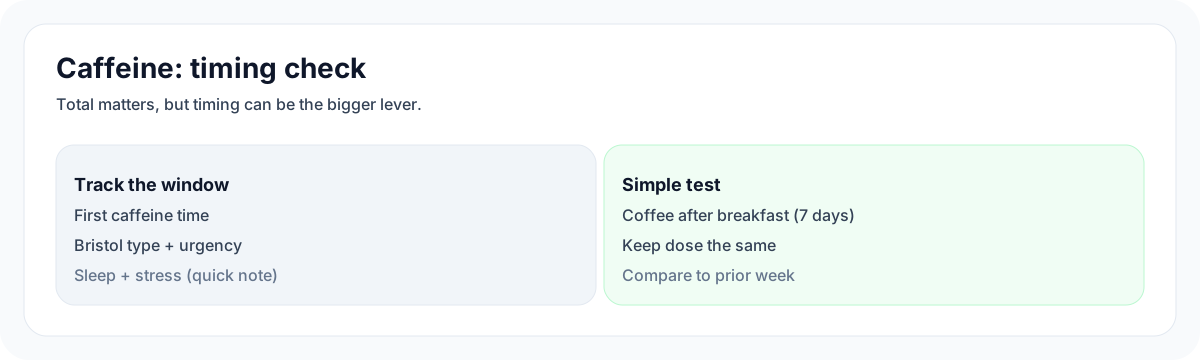
Caffeine timing at-a-glance

A simple 7-day timing check

If you usually drink coffee right after waking, try this instead:

  1. Eat first (even a small breakfast).
  2. Keep the same coffee dose.
  3. Track the morning window for 7 days.

What would count as a signal?

Examples of meaningful signals over 7 days:

  • Type 6 mornings drop from 4/7 → 1/7
  • Urgency goes from “yes” to “no” on 5+ mornings
  • The “morning rush” window becomes calmer (less repeat trips, less crampy urgency)

Optional confirmation: baseline → shift → baseline (A→B→A)

If you want to make it feel more like a real test:

  1. Baseline (7 days): your usual routine.
  2. Shift (7 days): coffee after your first bite of breakfast.
  3. Return (2–3 days): go back to your original timing.
  4. Shift again (7 days): repeat the timing change.

If symptoms track the timing change twice, it’s a stronger signal than one good week.

If you want the structured version, use:

FAQs

Do I have to cut coffee? +
No. This is about timing. Try delaying until after your first meal for a week.
What should I log? +
Time of first caffeine, stool type, and any urgency in the morning.
What if I still see Type 6–7? +
Try another experiment, like fiber smoothing, or talk to a clinician.

Related