StoolSense

Triggers

Food safety while traveling or eating out

Is this a one-off “bad meal” - or a repeatable travel/food pattern you can reduce?

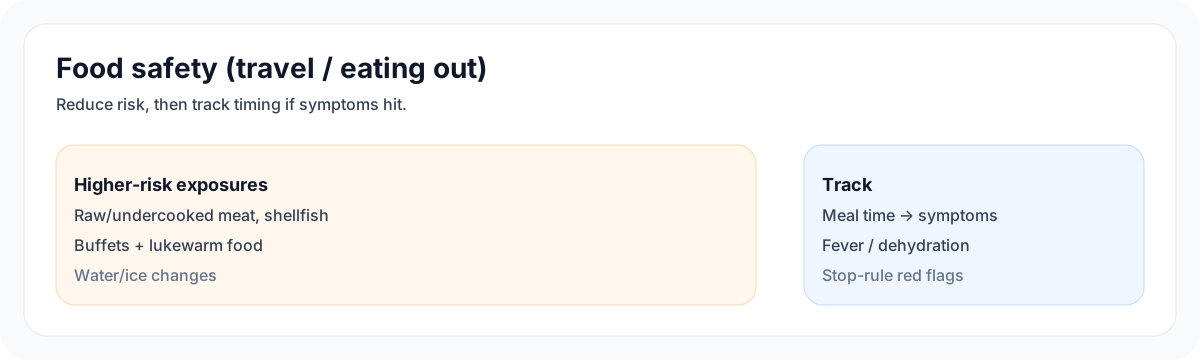
Most travel GI upsets are short-lived, but the risk rises with certain exposures (undercooked meats, raw shellfish, lukewarm buffet food, water/ice changes). The goal is to lower risk where you can, then track timing if symptoms hit so you know what actually correlates. Seek care for blood, black stool, high fever, severe pain, repeated vomiting, faintness, dehydration, or worsening symptoms.

Key takeaways

  • Risk is often about exposure + timing (what you ate, where, and when symptoms started).
  • Use a simple 7-day log while traveling - patterns show up faster than you think.
  • Dehydration and red flags are the priority, not “pushing through.”

Watch-outs and misinformation

  • Buffets and food that sits lukewarm are higher-risk than freshly cooked meals.
  • A lot of people blame “food poisoning” when it’s actually caffeine timing, alcohol, or a polyol stack - log those too.
  • Avoid DIY antibiotics or parasite meds without guidance; they can worsen diarrhea or mask important symptoms.

Safety notes

  • Seek care for blood, black/tarry stool, high fever, severe pain, repeated vomiting, faintness, dehydration, or confusion.
  • If diarrhea is persistent after travel, or you can’t keep fluids down, get medical advice.

What to track

  • Meal time + location
  • Higher-risk items (undercooked meat/fish, shellfish, buffet food, raw produce)
  • Water/ice source
  • Symptoms + start time (diarrhea, fever, cramps, vomiting)

How StoolSense helps

Log meals and stool with timestamps so you can see incubation windows.

Tag travel days and water source changes for quick pattern scans.

Build a clean timeline you can share with a clinician if symptoms persist.

Try this experiment

Run the Parasite panic reality check

Go to experiment

At a glance

Food safety while traveling at-a-glance

A simple 7-day travel log

You don’t need perfect tracking - you need enough detail to see timing.

  1. Log meals + water source (tap/bottled/ice).
  2. Mark any higher-risk items (raw/undercooked, buffets, shellfish).
  3. If symptoms hit, log the start time and severity.

If you’re spiraling into “parasite panic,” use the calmer, structured version:

FAQs

What should I track when traveling? +
Log meals with risk factors (raw/undercooked meats, shellfish, buffet foods), water source, and timing versus symptoms like diarrhea, fever, or cramping.
When is food-related diarrhea urgent? +
Blood, black stool, high fever, severe pain, or dehydration signs (dizziness, no urine) are red flags. Seek care instead of pushing through.
How does StoolSense help? +
Keep meal and stool logs with photos (blur), tag travel days, and note symptoms. After 7 days, see if certain foods or locations correlate with issues.

Related