
How this persona uses StoolSense
You care about consistency more than “perfect” habits. The fastest path is to track a simple baseline (types, timing, and a few context tags), then try one 7-day change.
At a glance
Your goal (what “better” looks like)
You’re usually not chasing a perfect Type 3 every day. You’re looking for:
- Fewer swings between hard (Types 1–2) and mushy/urgent (Types 6–7)
- A more predictable time-of-day pattern
- Less time spent guessing which habit “caused” today
A simple 7-day workflow
- Baseline first (2–3 days): log stool type + time of day.
- Pick one lever: fiber, coffee timing, or routine.
- Run it for 7 days: keep the rest steady so the result is readable.
- Decide: keep it, revert it, or refine it - then move to the next lever.
What to track (keep it light)
- Stool type (Bristol 1–7) and time
- Optional symptoms (1–3): bloating, pain, urgency
- Confounders: caffeine timing, sleep, stress, meds/supplements
If you want one simple rule: track type + time + one context tag.
Common traps (and how to avoid them)
- Stacking changes: new fiber + new probiotic + new diet = no signal.
- Judging one day: compare a week to a week, not Monday to Tuesday.
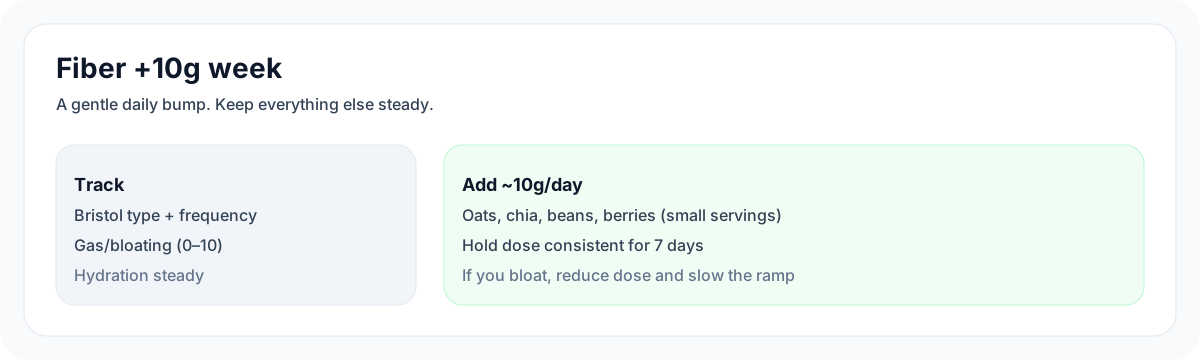
- Overcorrecting: if fiber makes you gassy, reduce the dose instead of “pushing through.”
If you need a clean starting experiment
Start with the linked experiment for 7 days. Keep everything else steady so you can tell whether the change helped.
After that, try one of these (one at a time):
When to stop self-testing
If you have blood, black/tarry stool, severe pain, fever, faintness, dehydration, unexplained weight loss, or a sudden sustained change from your baseline, skip experiments and get medical care.