
How this persona uses StoolSense
You’re not trying to self-diagnose. You’re trying to reduce uncertainty.
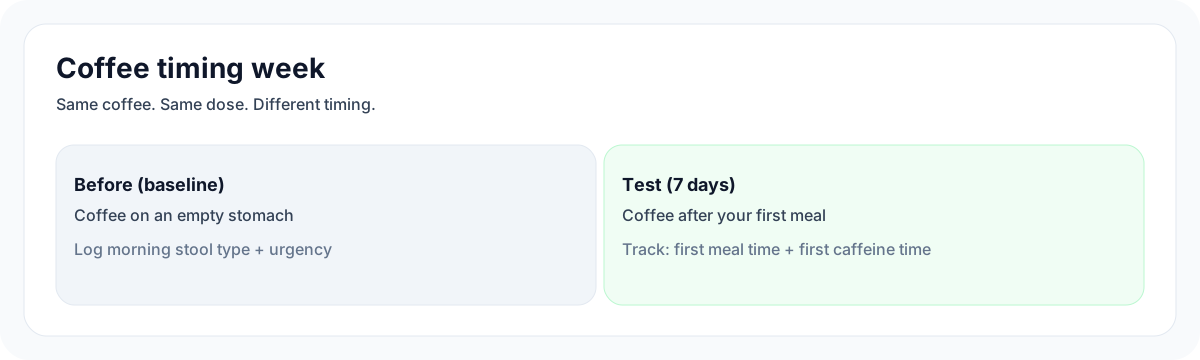
The goal is to capture a simple baseline, then run a short, safe test that answers one question (e.g., “Is coffee timing driving my morning urgency?”).
At a glance
Your goal (what “progress” looks like)
You’re not trying to remove every possible trigger. You’re trying to get to:
- Fewer “surprise” urgency days
- A shortlist of 1–3 likely drivers you can repeatably test
- Clear stop-rules so you don’t spiral into endless elimination
A calm trigger-finding workflow
- Log a baseline week: stool type + time + 1–3 symptoms.
- Pick one hypothesis: caffeine timing, lactose, polyols, etc.
- Run a 7-day test: keep the rest steady.
- Decide and move on: keep it, revert it, or refine it.
If the admin is what keeps breaking the loop, use the smallest useful structure from IBS tracker app vs generic notes app instead of dumping everything into Notes.
What to track (keep it focused)
- Stool type and timing
- Optional symptoms (1–3): urgency, pain, bloating
- Context tags: caffeine timing, dairy, sleep, stress, meds/supplements
If you’re overwhelmed, start with: urgency (Y/N) + Bristol type + caffeine timing.
Common mistakes that keep you stuck
- Changing five things at once (then you can’t tell what helped).
- Going too extreme (then you can’t sustain it long enough to learn).
- Ignoring red flags because you want the experiment to “work.”
Red flags (stop experimenting)
Get medical care for blood, black/tarry stool, severe pain, high fever, repeated vomiting, faintness, dehydration, unexplained weight loss, or a sudden sustained change from your baseline.
A simple sequence of starter tests
Start with the linked experiment for 7 days. Then, if you need the next move, try one of these (one at a time):
If symptoms are travel-related or you’re worried about “food poisoning,” use: