
You miss a day. Then two. Then suddenly you’re negotiating with your own body: “If I drink a coffee, will it help… or make it worse?”
Constipation is usually not a mystery disease. It’s often a pattern. The fastest way to stop guessing is a short, structured week.
Quick answer
Constipation may be linked to slow transit, low fluids, low fiber, routine changes, or meds. This week, log Bristol type + frequency for 7 days, then test one gentle change (fluids, fiber ramp, timing, or movement) and compare counts. If red flags appear, seek care.
When to seek care
Seek medical care (urgent if severe) for:
- Blood or black/tarry stool
- Severe or worsening abdominal pain
- Vomiting, fever, faintness, or dehydration
- Unexplained weight loss
At a glance
Why constipation happens (often)
Constipation has a lot of “boring” causes:
- Low fluid intake
- Low fiber intake or big fiber swings
- Routine changes (travel, late meals, disrupted sleep)
- Less movement
- New or changed meds/supplements (iron, some pain meds, antihistamines)
The fastest way to stop guessing is a short, structured tracking window.
Common traps (easy to fall into)
If your week is already off, these can accidentally make it worse:
- The sudden fiber bomb. Going from low fiber to “all the fiber” overnight can backfire (bloat + more slow transit).
- Stacking laxatives or supplements. When you change multiple things, you can’t tell what helped (or caused cramps).
- Ignoring med effects. Iron, antihistamines, some pain meds, and some supplements can push you constipated.
- Changing food + water + movement all at once. You end up with a result you can’t interpret.
A safer 7-day reset (one change at a time)
If you do nothing else, make your reset measurable:
- Pick a 7-day window. Don’t stack multiple new “gut hacks” in the same week.
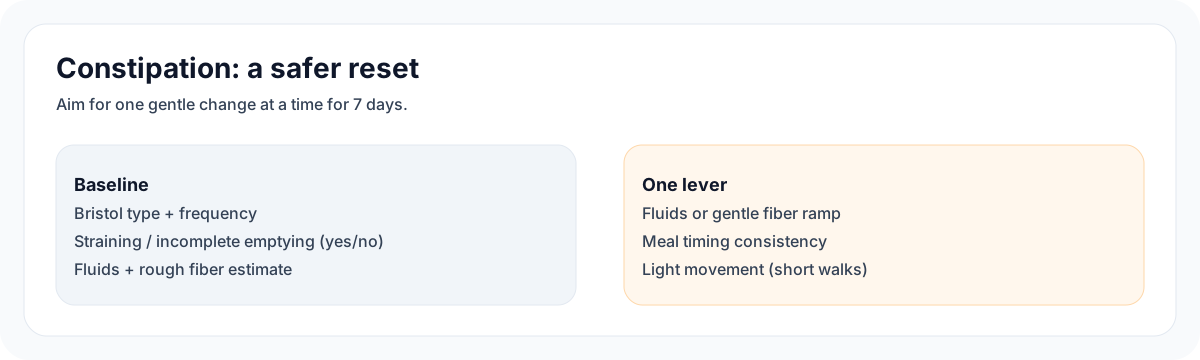
- Track Bristol type + frequency. This is your baseline.
- Choose one primary lever to test:
- Fluids (especially if your urine is dark)
- A gentle fiber ramp (not a jump)
- Meal timing consistency (same breakfast window)
- Light movement (a short walk after meals)
- Add a stop rule. If red flags show up, stop self-experimenting and seek care.
What would count as a signal?
“Worked” should mean something you can point to.
Examples of meaningful signals over 7 days:
- Bristol 1–2 days drop from 4/7 → 1/7
- “Straining = yes” days drop from 5/7 → 2/7
- Frequency moves toward your baseline (even 0–1 → 1–2 bowel movements/day can be meaningful)
- Less “incomplete emptying” (yes/no) and less crampy urgency from DIY fixes
Optional confirmation (when safe): keep a baseline week, do the change week, then return to your prior routine for 2–3 days and repeat the change for another week. If the pattern repeats, it’s a stronger signal than a one-off good day.
What to track this week
- Bristol type + frequency
- Straining and “incomplete emptying” feeling (yes/no)
- Fluids + a rough fiber estimate
- Meds/supplements (iron, antihistamines, pain meds) + sleep/stress
A simple 7-day test
- Track for 7 days without changing habits.
- Choose one lever (fluids, gentle fiber ramp, timing, or movement) for the next 7 days.
- Compare counts: Bristol 1-2 days, straining days, and frequency vs baseline.
Evidence note
Constipation is usually a pattern influenced by routine, diet, hydration, and meds. Tracking one change at a time helps avoid false conclusions.