
You wake up, you drink coffee, and you get urgency within an hour. It happens on Monday, Wednesday, Friday, and you start building your whole morning around it.
That’s the exact moment timing data becomes useful: not to optimize your life, but to spot a repeatable pattern you can test.
At a glance
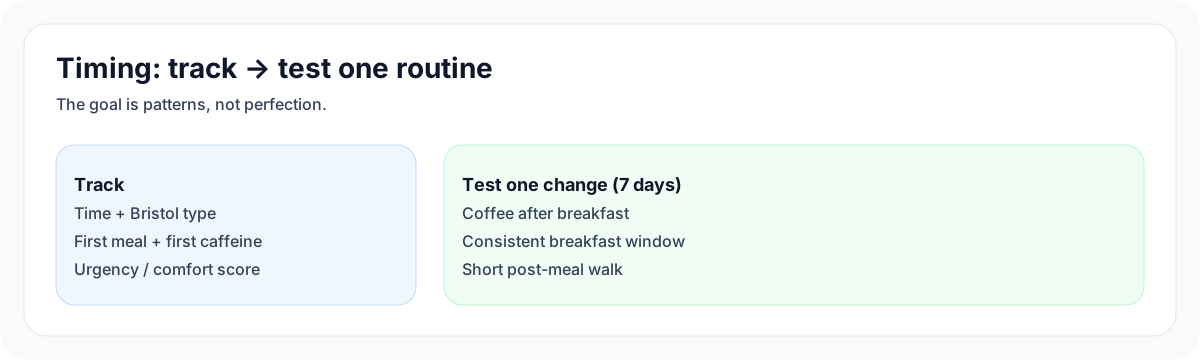
What “timing” helps you see
If you only track one thing beyond Bristol type, track when it happens.
Examples of actionable timing patterns:
- “Urgency within 30–60 minutes of coffee on an empty stomach.”
- “No bowel movement on travel days + low water intake.”
- “Type 1–2 after two low-sleep nights.”
A simple 7-day routine test (one change at a time)
Pick one routine tweak to test for a week:
- Coffee after breakfast. (If you’re testing caffeine as a trigger, timing is often the safest first move.)
- Consistent breakfast window. Same 60–90 minute window each day.
- A short post-meal walk. Even 10 minutes can help some people’s routine.
- Hydration consistency. Keep fluids steady so you don’t confuse dehydration with “bad food.”
Keep the rest of your habits as steady as possible.
Morning routine recipe (optional test)
If you want a simple “do this, then compare the week” option, try this for 7 days:
- Wake
- Water
- Breakfast (within your usual window)
- Coffee after your first bite
- 10-minute walk (or any easy movement)
This isn’t a forever rule. It’s a clean test.
What to track for this test
- Bristol type + frequency
- Time of first meal + first caffeine
- Urgency (yes/no) and a simple 0–10 comfort rating
- 1–3 symptoms if relevant (pain, bloating, nausea)
- Confounders: new meds/supplements, travel, big sleep/stress changes
What would count as a signal?
“Better” should mean something you can measure.
Examples of meaningful signals:
- Urgency mornings drop from 4/7 → 1/7
- Type 6–7 mornings drop from 3–4/7 → 0–1/7
- Your first bowel movement shifts from “random” to a more predictable window (even if the exact time varies)
Optional confirmation (when safe): baseline 7 days → routine change 7 days → go back to your usual routine for 2–3 days → repeat the routine change for 7 days. If the pattern repeats, it’s a stronger signal than one good week.
Safety-first reminder
Seek care (urgent if severe) for:
- Blood or black/tarry stool
- Severe or worsening pain
- Fever, vomiting, faintness, dehydration
- Unexplained weight loss